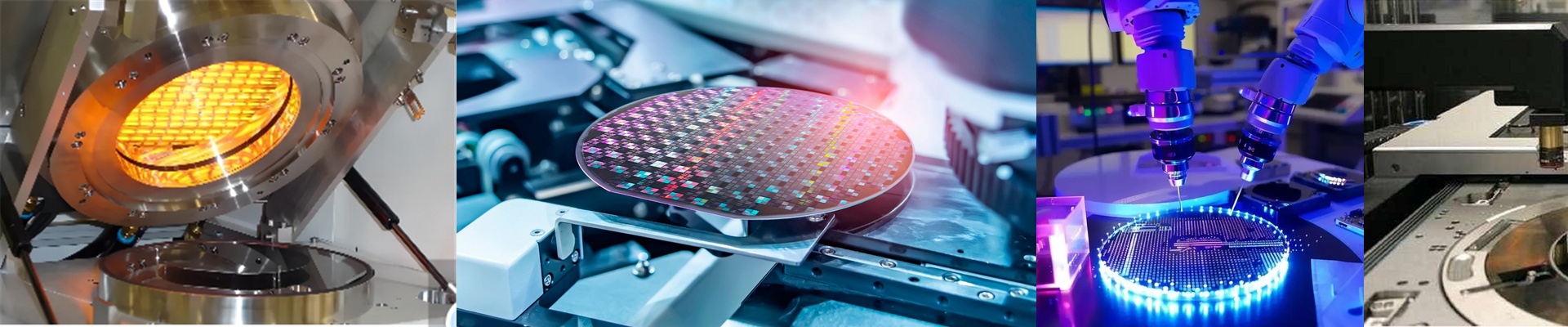
Out on the fab floor, you know how quickly a 0.5°C swing during photoresist bake can throw linewidths off by nanometers and take a whole lot down. Thermal control isn’t some background task—it’s the boundary line of the process. TEL heater lamps were built for that boundary, putting repeatable heat exactly where the wafer, the photoresist, and the schedule all meet. What actually matters under the hood TEL heater lamps lean on short-wave infrared (IR) to dump energy straight into quartz susceptors and wafer stacks. That gives you sub-second response and wafer-level temperature uniformity within ±0.1°C across the bake surface. In soft bake and hard bake, that kind of precision keeps solvent removal and crosslink kinetics stable, so CD control and sidewall profile don’t drift. Cleanroom fit is baked into the design: low-outgassing materials, sealed junctions, and a particle profile that plays nice in ISO Class 1–100 environments. Reliability shows up as stable output over 5,000+ hours, with maintenance intervals you can plan around—so you’re scheduling downtime, not scrambling for emergency stops. Why it holds up in real lithography clusters In lithography clusters, the lamp’s fast ramp and tight steady-state control let you tighten thermal recipes without risking photoresist yield. Better temperature repeatability cuts within-lot and lot-to-lot variability, which means less rework and improved parametric yield on advanced nodes. Energy use drops too, because short-wave IR couples efficiently and wastes less heat in chamber structures. The payoff is consistent bake profiles, fewer particle excursions, and throughput that keeps pace with line demand. A few shop-floor details that make the difference Installation has to respect the optical alignment and thermal clearances specified for each chamber platform. If those are off, uniformity suffers and lamp life takes a hit. Match the lamp to the system’s voltage, connector, and control algorithm—open-loop heating simply won’t deliver the same uniformity as closed-loop, sensor-validated control. When you swap susceptors or add process kits, the thermal mass changes. Retune the profile to keep that ±0.1°C performance. Get these things right, and the lamp acts like a fixed, repeatable thermal block in your process stack.